
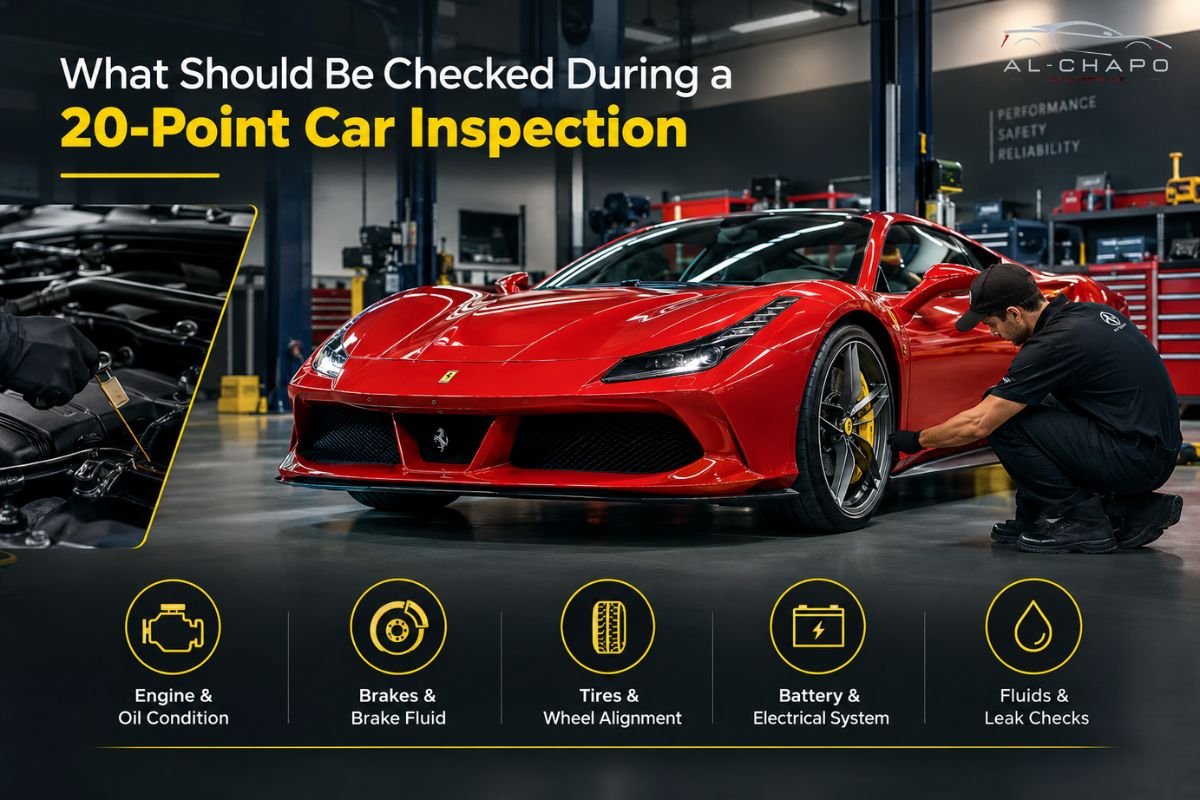
What Should Be Checked During a 20-Point Car Inspection?
Table of Contents
- Key takeaways
- Why does a 20-point inspection matter in Dubai?
- What are the 20 points checked in a car inspection?
- What problems can an inspection detect?
- When to get your car inspected?
- DIY checks vs professional inspection
- What happens after the inspection?
- Final word
- Frequently asked questions
A car inspection of 20 points evaluates the effectiveness of the different systems in the vehicle that can ensure the safety of driving, including engine fluids, battery, brakes, torque, and steering, among other things. In Dubai, the high heat and dust in the desert can impact how various parts function normally.
It is like a health check of the vehicle. The expert goes over the items in detail, such as the engine area, tyres, brakes, and others, before doing a check-up of the vehicle through the car diagnostic tool. Therefore, having a car inspection done in Dubai at least once a year will help identify problems before they lead to any car failures due to the desert conditions.
Key takeaways
- A 20-point inspection involves checking various aspects of a vehicle such as the fluids, battery, brakes, tyres, suspension, lights, AC system, and other items related to safety.
- The summer heat can either reveal batteries or tyres that are already weak, or a cooling system that does not function properly.
- While diagnostic scans may give fault codes, the technician needs to inspect individual components manually.
- Check beforehand before traveling long distances, selling or buying a vehicle, or witnessing any changes occurring in the condition of the car.
Why does a 20-point inspection matter in Dubai?
Between the summer heat, hot asphalt, dust, stop-start traffic and fast highway runs, cars here wear out rubber, fluids and electrical parts faster than they would somewhere milder.
Ask mechanics in the UAE what they see every summer, and the list barely changes: tyres, batteries, coolant and AC. Catching those early costs a lot less than a recovery truck on Sheikh Zayed Road.
| Dubai condition | Parts under most stress | What can go wrong |
| Summer heat above 45°C | Battery, coolant, tyres, hoses | Sudden battery failure, overheating, blowouts |
| Dust and sand | Air filter, AC condenser, underbody | Clogged filters, weak cooling, hidden wear |
| Stop-start traffic | Brakes, transmission, cooling system | Faster pad wear, heat build-up |
| Long highway drives | Tyres, suspension, alignment | Uneven wear, vibration, tyre damage |
What are the 20 points checked in a car inspection?
Workshops build their lists a little differently. These 20 cover the parts that matter most for safety and reliability.
Under the bonnet
- Engine oil and filter- The technician looks at the oil’s level, colour, and thickness. Heat breaks oil down faster, so old oil protects the engine less than you would expect. Dark, gritty, or low oil usually means a service is overdue, or something is leaking.
- Coolant and radiator- Level, colour, radiator condition, and the cap seal all get checked. The cooling system works hardest in summer, and a small leak or tired coolant can push an engine into overheating. That damage happens fast.
- Brake fluid and other fluids- Brake, power steering, and washer fluids all get a look. Brake fluid absorbs moisture as it ages, which lowers its boiling point when you brake hard. You feel it as a soft, spongy pedal.
- Transmission and gearbox- This covers fluid condition, leaks, and how the gearbox shifts. Harsh shifts, slipping, or a delay between gears often show up well before a big repair bill does.
- Belts and hoses- Cracks, fraying, glazing, and bulges are what the technician hunts for. Heat hardens rubber, and a single snapped belt can knock out the alternator, water pump, and power steering together.
- Air filters (engine and cabin)- Dust and sand clog filters quickly. A blocked engine filter costs you performance and fuel economy. A dirty cabin filter cuts airflow and can leave a stale smell coming from the vents.
- Battery and charging system- Voltage, terminals, and alternator output get tested. Heat shortens battery life, and plenty of batteries die with no warning. Slow cranking or flickering lights are the early hints.
Brakes and tyres
- Brake pads and discs- Pad thickness, wear, and the disc surface are measured. Squealing, longer stopping distances, or a shaking pedal usually mean attention is needed soon.
- Handbrake and brake lines- The handbrake should hold the car firmly without pulling up too far. Hoses and lines are checked for rust, cracks, and leaks.
- Tyre tread and condition- Tread depth, cracks, bulges, and uneven wear all count. Hot roads add stress, and worn or damaged tyres are more likely to fail at speed. The technician may also read the date code to see how old the tyres are.
- Tyre pressure and spare- Pressure should match the figure on the door placard, ideally measured when the tyres are cold. Under-inflated tyres run hotter and wear faster. The spare and jack get checked too, since nobody thinks about them until the day they need them.
- Wheel alignment and balance- A car that pulls to one side or shakes on the highway may need adjusting. Potholes and kerbs knock alignment out, and bad alignment eats tyres.
Suspension, steering and underbody
- Suspension- Shock absorbers, springs, bushes and ball joints are inspected. Bouncing, clunks over speed bumps, or nose-diving under braking point to worn parts.
- Steering- The technician checks for play, stiffness, noise, and leaks around the steering rack and tie rods. Loose or heavy steering hurts control, most of all at higher speeds.
- Exhaust and underbody- The exhaust is checked for leaks, rust, and loose mounts. Underneath, they look for fluid drips and damage from kerbs or rough roads. Strange noise or fumes inside the cabin should never be brushed off.
Comfort and safety features
- Air conditioning- Cooling performance, compressor, condenser, vents, and airflow are tested. In Dubai, the AC matters for more than comfort, because a hot cabin tires the driver. Weak cooling or strange smells point to a developing fault.
- Lights and indicators- Headlights, brake lights, indicators, hazards, and fog lights all get tested. A dead brake light is easy to miss from the driver’s seat, yet it leaves the driver behind you guessing.
- Wipers and windscreen- Sun dries out wiper rubber, and chips in the glass can spread in the heat. Washer spray gets checked too, because dust builds up fast.
- Seat belts and airbag warning light- Belts should retract smoothly and latch securely. The airbag light should go out after start-up. If it stays on, the system needs a proper look.
Computer diagnostics
- Diagnostic scan- A car diagnostic scanner Dubai workshops reads stored and pending fault codes from the engine, transmission, ABS, airbag, and other modules. It can flag a failing sensor before any warning light comes on. The scan only points the way, though. The technician still has to confirm the cause by hand.
What problems can an inspection detect?
The goal is to find faults while they are still small. Common examples:
| Problem | Early sign | Where it is caught |
| Overheating risk | Temperature creeping up, coolant smell | Coolant, hoses, belts |
| Battery failure | Slow start, dim lights | Battery and charging test |
| Brake wear | Squeal, long stopping distance | Pads, discs, brake fluid |
| Tyre failure | Cracks, bulges, uneven wear | Tread, pressure, alignment |
| Weak AC | Warm air, odd smell | AC test, cabin filter |
| Fluid leaks | Drips under the car, low levels | Fluids, underbody |
| Hidden sensor faults | No visible symptoms yet | Diagnostic scan |
When to get your car inspected?
Follow your manufacturer’s service schedule, then add an inspection at these moments.
| Situation | Why it helps |
| Before summer | Finds weak batteries, tired coolant and worn tyres |
| Every six months or so | Stops small issues from building up |
| Before a long road trip | Cuts the chance of a breakdown far from home |
| Before buying or selling a used car | Gives you an honest picture of its condition |
| After an accident or hard pothole hit | Reveals alignment or suspension damage |
| When a warning light or noise appears | Pinpoints the cause early |
| Before annual registration renewal | Lets you fix issues before the mandatory technical test |
However, an inspection does not replace the technical test required for vehicle registration renewal, but it can help your car pass it. Car repairs services Dubai also will be beneficial.
DIY checks vs professional inspection
You can check tyre pressure, fluid levels, lights and wipers yourself every month, and you should.
A professional visit goes further. A lift gives a proper view of the underbody, brakes and suspension. Workshop tools measure pad thickness and battery health, and a scanner reads data you will never see from the driver’s seat.
At Alchapo Auto Service, the inspection starts with a visual and hands-on check, followed by a scan, so findings rest on evidence instead of guesswork. Moreover, look for the same approach in any workshop offering vehicle inspection services in Dubai.
What happens after the inspection?
A good report sorts findings into what is fine for now, what to keep an eye on, and what needs attention soon. Ask the technician to show you the worn parts and explain their reasoning before you approve any work.
Many findings lead to routine upkeep: oil changes, filter replacements, fluid top-ups. Regular car routine maintenance services in Dubai keep these on schedule, so the next inspection has less to find.
Furthermore, when something does need fixing, ask for a written quote and a plain explanation. Choosing car repairs services in Dubai that explain the problem first helps you avoid paying for work you did not need.
Final word
A 20-point inspection tells you what condition your car is really in before the heat, the traffic or a long drive finds out for you. It covers what keeps you safe, like brakes, tyres, lights and seat belts, and what keeps you comfortable, like the AC.
If your car is due, book a visit with Alchapo Auto Service and ask for a written report you can follow.
Frequently asked questions
Under an hour for most cars. It runs longer if a fault needs tracing or the scan throws up codes that need further testing.
Every six months suits Dubai’s climate. Follow your manufacturer’s schedule as well, and add one before summer or any long trip.
No. A service replaces parts and fluids. An inspection checks condition and reports what needs attention, so you decide what gets fixed.
It should. Scanning reads stored fault codes and can show developing problems before a dashboard light appears.
Basics like tyre pressure, fluids and lights are fine to handle at home. Brakes, suspension, the underbody and scan data need workshop equipment.
Yes. Heat and dust affect newer cars too, so an inspection after heavy use, or as warranty coverage nears its end, can reveal issues early.
Tyres, battery, coolant, brakes, and air conditioning. They feel the heat first and cause most of the roadside trouble.
Ask for a written report with a clear priority order. Brakes and tyres come first, and wear items that can wait after them.