
Why Regular Oil Changes Are Important in Dubai Weather
Table of Contents
- Key Takeaways
- How does Dubai heat affect engine oil?
- Signs your car needs an oil change
- Benefits of timely oil changes
- Oil change frequency in Dubai climate
- Choosing the right service center
- Cost comparison: DIY vs professional service
- Final thoughts
- Frequently asked questions
Key Takeaways
- Dubai heat wears down engine oil almost twice as fast as it would in a cooler climate
- Missed oil changes tend to show up later as overheating, higher fuel bills, or worse
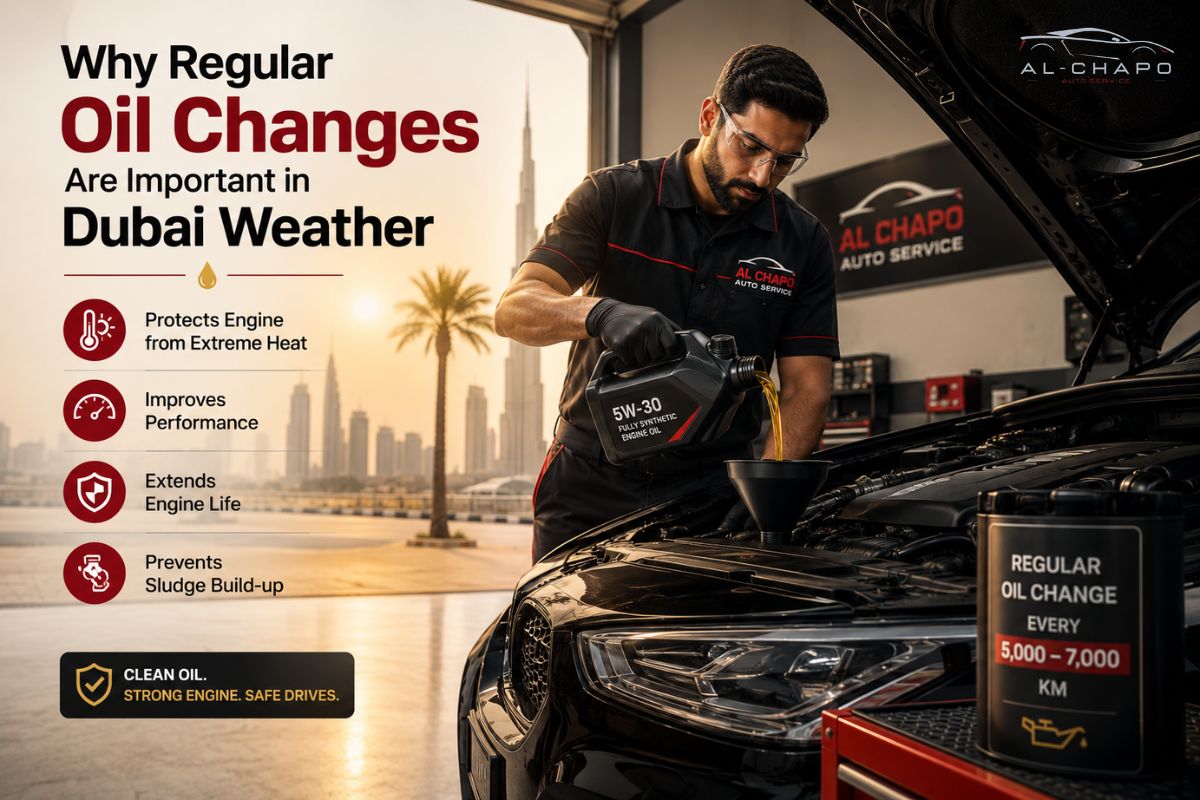
- Most cars here need fresh oil every 5,000 to 7,500 km, depending on what oil is used
- A trusted shop for car routine maintenance services in Dubai ends up saving you money over time
Summer in Dubai regularly pushes past 45°C, and that heat wears down engine oil far quicker than it would in a milder climate. Once oil starts breaking down, it can’t lubricate or cool your engine the way it should. A dependable car oil change service in Dubai keeps that damage from building up, so you’re not stuck with an expensive repair bill later. If you drive here regularly, staying on top of oil changes isn’t something you can push off. It’s just what your car needs to handle this weather.
How does Dubai heat affect engine oil?
Engine oil has one job- keep the moving parts inside your engine from grinding against each other. Heat works against that.
When it’s 45°C or 48°C outside, the temperature under the hood climbs even higher. That heat thins the oil out. Once oil gets too thin, it stops coating engine parts the way it needs to, and friction starts creeping in.
However, left unchecked, that friction wears down metal parts that used to run smoothly. The engine has to work harder to do the same job, burns more fuel doing it, and eventually starts showing damage that a timely oil change would have prevented.
Then there’s the dust. Roads here carry a lot of sand, and fine particles work their way into your oil over time. Gritty oil doesn’t lubricate the way clean oil does. In some cases, it can even scratch engine parts from the inside.
Car routine maintenance services in Dubai schedule is not what you would expect in colder, cleaner country. The heat and dusty roads in Dubai mean that your car requires more regular attention to keep it running well.
Signs your car needs an oil change
Most cars give you some warning before things go wrong. Watch for:
- The oil change light on your dashboard
- An engine that sounds louder or rougher than usual
- Oil that looks dark, thick, or gritty on the dipstick
- A burning smell while you’re driving
- Fuel use is creeping up without any change in your driving.
- Exhaust smoke that looks darker than normal
- The engine is taking longer to start in the morning.
Furthermore, if two or three of these sound familiar, it’s worth booking a car oil change service Dubai appointment soon. The longer you wait, the more it tends to cost.
Benefits of timely oil changes
Sticking to an oil change schedule isn’t just a formality. It changes how your car actually drives and how long it lasts.
- Better engine performance
Fresh oil keeps everything moving the way it’s supposed to. You’ll notice it in how the car accelerates and how it just feels on the road.
- Improved fuel efficiency
Old, thick oil forces your engine to work harder for the same output, which means burning more fuel for the same drive. Clean oil takes that strain off, and you’ll see it reflected at the pump.
- Longer engine life
Think of it the way you’d think about a health checkup. Catching a small issue early is a lot cheaper than dealing with it once it’s turned into something bigger.
- Lower repair costs
An oil change is a small cost. Replacing engine parts damaged by old oil is not. Spending a little now is usually what keeps you from spending a lot later.
- Better resale value
A documented history of regular oil changes tells a buyer the car was looked after. That matters more than people expect when it’s time to sell.
Oil change frequency in the Dubai climate
Given the heat and dust, oil change intervals here run shorter than what’s printed in most car manuals, which are usually written with cooler climates in mind.
| Oil Type | Recommended Interval (Dubai) | Recommended Interval (Cooler Climates) |
| Conventional Oil | 3,000 to 5,000 km | 5,000 to 7,500 km |
| Synthetic Blend | 5,000 to 7,000 km | 7,500 to 10,000 km |
| Full Synthetic | 7,000 to 10,000 km | 10,000 to 15,000 km |
These numbers are a starting point, not a fixed rule. How you drive, how old your car is, and the condition of your engine all factor in. A good workshop offering car repair and maintenance service in Dubai will actually check your oil rather than just going by the mileage on the sticker.
Choosing the right service center
Not every garage deals with Dubai’s conditions the same way. Before you pick one, it’s worth checking:
- Whether they use oil grades built for high heat
- If they check the oil filter, not just the oil itself
- Whether pricing is upfront, with no surprise add-ons
- What other customers in your area are saying
- If there’s a warranty or guarantee on the work
- Whether they actually explain what they found during the check
At Alchapo Auto Service, technicians look at the engine’s overall condition during every oil change, not just the oil level. That gives you a better sense of what’s actually going on under the hood, and it tends to catch small issues before they turn into bigger ones. People searching for the best car service center in Dubai are usually looking for exactly this: a shop that tells you what’s really happening with your car, not just one that swaps the oil and sends you on your way.
Cost comparison: DIY vs professional service
Some drivers try changing their own oil to save a bit of money. Here’s how that actually stacks up against taking it to a shop:
| Factor | DIY Oil Change | Professional Service |
| Time Required | 45 to 60 minutes | 20 to 30 minutes |
| Tools Needed | Bought separately | Already on hand |
| Oil Disposal | On you | Handled by the workshop |
| Inspection Included | No | Usually, yes |
| Risk of Errors | Higher if you’re new to it | Lower, done by trained staff |
| Warranty Impact | Can void some warranties | Keeps your warranty intact |
DIY looks cheaper on paper, but once you factor in the inspection and proper disposal that come with a professional service, it often works out better. Alchapo Auto Service handles all of that as part of the job, so you’re getting more than just an oil top-up.
Final thoughts
Dubai’s heat and dust can wear out your engine quicker than you realize. That’s why it’s important to change your oil regularly. Engine oil can prevent costly repairs, improve performance, and protect your engine with fresh oil.
Don’t wait for a warning light or strange noise. Ensure your car is always on the road flawlessly by scheduling the next oil change appointment at Alchapo Auto Service.
Frequently asked questions
In Dubai’s hot climate, most cars require new oil every 5,000 to 7,500 km. Full synthetic oil will last slightly longer between changes.
Old oil causes high engine temperature, increased friction, and poor fuel efficiency. It can cause damage if left for too long that will cost much more to rectify.
Yes. Performs well under high temperatures, breaks down slower than regular oil, and provides better protection to your engine during the summer months.
Search for transparent pricing, authentic parts, and technicians that communicate. Customer reviews are typically also a good indicator.
It can. Allowing the oil to be used for too long can cause the bearings to wear and lead to some overheating, which may not be reversible. Prevents this by making changes when they are needed.
Usually involves oil & filter change and inspection of fluid levels, belts, and hoses. Numerous stores also perform checks on tire and battery condition.
Yes. Over time, the oil becomes thick and gritty as dust and sand from the local roads crease it.
Engines here were subjected to additional stresses from heat, dust, and heavy traffic. This is why car routine maintenance in Dubai tends to be conducted at shorter periods