
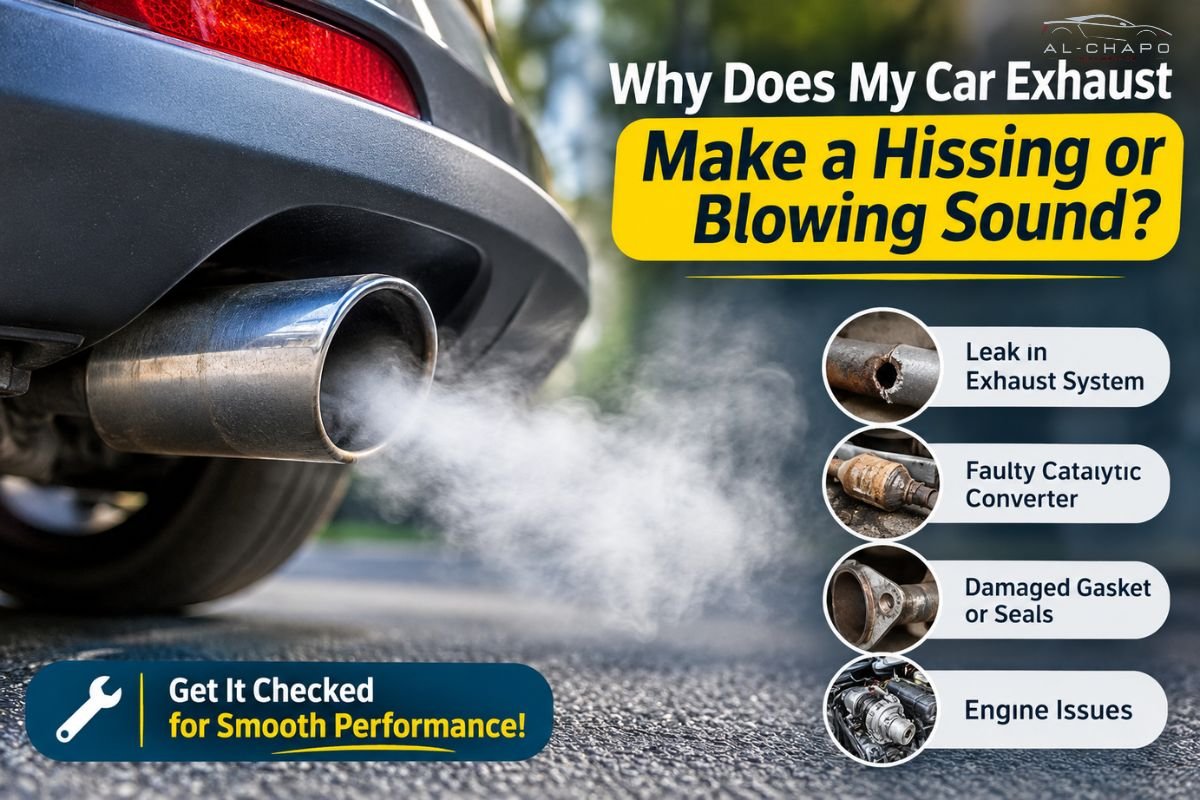
Why Does My Car Exhaust Make a Hissing or Blowing Sound?
Table of Contents
- Key takeaways
- What does a hissing or blowing exhaust sound mean?
- Common causes of a hissing exhaust sound
- Why does a blowing exhaust sound happen?
- How do Dubai conditions affect your exhaust system?
- Is it safe to keep driving with an exhaust leak?
- How do mechanics find an exhaust leak?
- Car exhaust repair options and what to expect?
- How to choose the best car service center?
- Preventing exhaust problems in hot climates
- Final thoughts
- Frequently asked questions
The sounds of a hiss or blow from the exhaust system typically indicate that there is a problem with gas that is leaking out before it reaches the muffler. The most common reasons are a crack or a hole in the pipe, a faulty clamp or one that has been placed improperly, a damaged gasket in the joint of the exhaust system and the engine, or a damage to the flex pipe. Hisssing noise usually means that there are minor leaks of the pipes and the joints whereas blow indicates a bigger opening and a larger space for the leakage. Ignoring it might cause poor engine performance and fuel efficiency and, in some rare cases, even fumes can penetrate into the cabin.
In case you have such problems, you can get a professional exhaust leak checkup at Alchapo Auto Service. In this guide you will find everything about the sounds, reasons, climate influence in Dubai, and possible repairs.
Key Takeaways
- Hiss means there is leakage in a pipe, clamp, or gasket, so get it checked immediately.
- Noise such as blow may mean manifold, flex pipe, or gasket issue near the engine and should be taken care of quickly.
- Dust, heat, and humidity cause more wear in Dubai, and so periodic underbody check-up is very important.
- Carbon monoxide is the biggest danger. In case of exhaust smell in the car and feeling sick, you have to stop driving immediately.
What does a hissing or blowing exhaust sound mean?
The exhaust system is a closed line that dissipates burnt gas from the engine to the rear of the vehicle. Every joint, pipe, and piece needs to be tightly sealed so that the burnt gas travels in one direction and noise is regulated by the muffler. When there is a break in that line, exhaust gases are released too soon, and the engine makes an unwanted noise.
Why does the sound change with speed and temperature?
However, exhaust leaks may vary according to engine operation. For instance, an exhaust leak may not be very loud at idle but may become more noticeable during acceleration due to high pressure in the pipe resulting from increased engine operation. Many drivers usually realize the existence of such a leak when the engine is cold, because metal tends to expand when heated, and it closes some gaps. Pay attention to when the noise shows up, because it gives your mechanic useful clues.
Hissing vs blowing: what the difference tells you
Both sounds point to a leak, but pitch and intensity can help narrow down where it is and how urgent it is. The table below sums up the most common patterns.
| Sound | Where It Usually Comes From | Likely Cause | Urgency |
| Light hissing | Pipe sections, pinholes, joints | Small crack, rust spot, or loose clamp | Moderate |
| Steady blowing | Near the engine or manifold | Cracked manifold or failed gasket | High |
| Puffing when cold | Engine-side connections | Gasket seepage that seals when warm | Moderate to high |
| Rattling or buzzing | Under the car, middle section | Loose heat shield or failing hanger | Low to moderate |
Common causes of a hissing exhaust sound
A hiss is usually a small, steady leak. It’s often the first sign of trouble, so it’s the best time to fix it before the damage spreads.
- Small Cracks and Rust Holes in the Pipe
Being that exhaust pipes are made of thin metal, they are exposed to heat, moisture and debris daily. Over time, pinholes and cracks begin to appear mainly around the welds and the bends. Road salt and humidity cause rust to form rapidly, therefore a hole just as tiny as a pencil tip can be loud. This is the primary reason people seek for exhaust repair services in Dubai because the extent of the damage can reach a serious stage in no time.
- Loose or Worn Exhaust Clamps
Clamps hold pipe sections together and ensure that the joints are sealed. The vibrations on the road and from the engine may cause clamps to come loose, while where the metal is constantly heating up and cooling down, it may become weak. A loose clamp will often produce a hissing sound at the joint, and replacing or tightening the same is often an inexpensive process. Note whether the hissing changes with acceleration. A loose joint often gets louder under load.
- Damaged Exhaust Gaskets
Gaskets seal the connections between the exhaust and nearby parts, such as the manifold and the downpipe. They’re built to handle high heat, but they wear out. A failing gasket can hiss, and the sound is often most noticeable on cold starts. Get your exhaust gaskets checked at Alchapo Auto Service before the leak reaches nearby sensors.
Why does a blowing exhaust sound happen?
In comparison to hissing, blowing is much more powerful and loud. It indicates that a bigger hole has developed in your exhaust system or a leak is occurring nearer to your engine block, where the exhaust pressure is highest.
- Exhaust Manifold Cracks and Gasket Failure
Gases produced by each cylinder are collected by the exhaust manifold and delivered to the exhaust pipe. It is usually very hot and its frequent heating and cooling can result in cracking of the manifold. Cracks here often produce a puffing or blowing sound, especially on a cold start. Since the manifold sits close to the engine, gases can also reach sensors and affect how the engine runs.
- Broken or Torn Flex Pipe
Flex pipes are often braided or corrugated pieces which serve to absorb vibrations and movement of the engine itself. As time passes, these pipes can start to wear down leading to cracks and tears that can create a noise from the front of the vehicle. In general, this noise can be felt by the drivers, especially when they accelerate or go over bumps. The replacement of flex pipes will usually be an easier job than changing a manifold which makes early recognition vital.
- Muffler and Resonator Damage
Mufflers and resonators function to cut noise and ensure the right tone for the engine. When these components develop rust through or the baffles stop functioning, the mufflers will begin to make a loud noise. This damage is usually quite visible from underneath the vehicle, but the heat shields will prevent good access to the damaged muffler. A quick examination will help you figure out if the sound originates from the rear or from the front of the car.
- Turbocharger and Diverter Valve Issues
The turbocharged car has its unique sound. The diverter or blow off valve is used to release pressure from an inlet pipe. If there is a problem, it might produce some noise which may be mistaken as an engine exhaust leak by drivers. Therefore, there may be a leak from turbo to an outlet. The problem involves intake and outflow; thus an expert diagnosis would be best for determining its origin.
How do Dubai conditions affect your exhaust system?
Dubai is tough with vehicles, and understanding this fact explains why exhaust issues develop earlier than expected and why regular inspections are necessary.
- Heat Cycles and Metal Fatigue
During the hot summer periods, the temperature under the vehicle may reach excessively high levels. The exhaust system heats and cools every time the engine starts and stops. As a result, the metal expands with every heating and shrinks upon cooling, ultimately leading to a breakdown of welds, gaskets, and clamps. It results in these small holes that produce hissing sounds.
- Sand, Dust and Coastal Humidity
The sand and fine dust enter through cracks to accelerate wear of clamp hinges. Humidity of coastal areas is corrosive to metals that are exposed beneath cars. Underbody inspections might be required more frequently for cars parked near the sea or driven through dusty areas. The maintenance of an uncluttered undercarriage by car owners would be wise to do so.
- Stop-and-Go Traffic and Short Trips
Traffic in Dubai results in an excessive amount of time spent idling and taking short journeys. The exhaust does not have a chance to get hot. Moisture accumulates in the internal parts of the pipes leading to rust formation. With time, water will corrode the pipes from the inside. An occasional long drive can help the car get dry. A quick inspection can identify damage in its early stages.
Many people turn to the Dubai providers for car repairs services. This is because investing in an inspection can make sure you don’t incur large expenses on repairs later. If you notice any irregular sounds, book an appointment.
Is it safe to keep driving with an exhaust leak?
Even though a small hissing leak is not considered to be an emergency in most cases, you must still pay attention to it. The major danger lies in carbon monoxide, which is a colorless and odorless gas that poses a threat in confined spaces.
When a leak is near the engine, below the floor, or next to the rear seats, fumes may be drawn into the cabin. The risk of carbon monoxide lies in the fact that you may be unaware of it until symptoms develop.
Warning Signs That Need Immediate Attention
If you observe any of the following, promptly stop driving and get the car inspected right away:
- An odor of exhaust comes from inside the car even if the window is partly open
- You experience headaches, uneasy feelings, or dizziness while driving
- A loud honking noise increases when accelerating
- Dashboard indicators light up including check engine
- Black smoke appears near the exhaust
- The engine is not performing as before
In case you feel dizzy or suffer from a headache while driving, safely stop driving and switch off the engine before you get any fresh air outside of the car. If the condition does not improve or wears off, consult your doctor.
How do mechanics find an exhaust leak?
Finding the exact source of a leak takes more than listening. Good technicians follow a set process so they aren’t guessing, and so you don’t pay for repairs you don’t need.
- Listen and reproduce the sound: The technician starts the engine cold and warm, then tests the car at idle and under load to see when the noise changes.
- Inspect the system visually: They check pipes, joints, clamps, hangers, and the manifold for rust, soot marks, cracks, or missing parts.
- Run a smoke test: Low-pressure smoke goes into the exhaust, and any leak shows up as smoke escaping from the damaged spot.
- Check the sensors and readings: Oxygen sensor data can show whether the leak sits upstream of the sensor, which affects the fuel mixture.
- Agree on the repair plan: Once the source is found, the technician recommends a fix, and you approve the work before any parts are replaced. If the damage is severe, the team may suggest car exhaust replacement services Dubai instead of a patch.
An accurate diagnosis keeps you from paying for parts you don’t need. Ask the technician to show you the damaged area.
Car exhaust repair options and what to expect?
The right car exhaust repair services Dubai depends on where the leak is and how bad it is. Some fixes take under an hour. Others need parts and more time.
| Problem | Typical Fix | Repair Type | Time Needed |
| Loose clamp | Tighten or replace clamp | Simple adjustment | Under 1 hour |
| Gasket leak | Replace gasket | Minor repair | 1 to 3 hours |
| Small pipe crack | Patch or weld | Partial repair | 1 to 2 hours |
| Torn flex pipe | Replace flex section | Component replacement | 2 to 3 hours |
| Cracked manifold | Replace manifold | Major repair | 3 to 6 hours |
| Rusted muffler | Replace muffler | Component replacement | 1 to 2 hours |
Times vary by vehicle model and workshop, so ask for a written estimate before work starts.
When is repair enough?
If the damage is limited to one clamp, a small crack, or a worn gasket, repair is usually the most economical choice. A good technician can often seal or replace just the affected section. The rest of the system stays original, which helps if the other parts are still in good shape.
When does replacement make more sense?
If the pipe is badly corroded, several joints are failing, or the manifold has cracked, replacement is usually the better long-term move. Patching a heavily rusted section tends to cause repeated leaks. After the diagnosis, a shop that offers car exhaust replacement services Dubai can fit a new section that matches your vehicle’s specs.
How to choose the best car service center?
Picking the right workshop matters as much as identifying the problem. A good service center explains what’s wrong, shows you the evidence, and gives you options.
What to look for in a reliable workshop?
- Technicians who know your car’s make and model
- Clear, itemized estimates before any work begins
- Quality parts, with warranty information provided
- Diagnostic tools such as smoke testers and computer scanners
- Customer reviews that mention honest pricing and quick turnaround
- Willingness to show you the damaged part and explain the repair
A trustworthy shop won’t push you into work you don’t need. When you compare options, look for a team that pairs strong diagnostics with clear communication. Searching for the best car service center Dubai is a good start, but check credentials and reviews before you book.
Questions to ask before booking
Before agreeing to any repair, ask about warranty coverage, expected completion time, and whether the quote includes parts and labor. Also ask whether the technician will test the system afterward to confirm the leak is gone. These questions help you avoid surprises.
Preventing exhaust problems in hot climates
Prevention costs far less than repair. A few simple habits can extend the life of your exhaust, especially in Dubai’s climate.
- Schedule underbody inspections every six months, or as your service schedule recommends
- Rinse the undercarriage after driving near the coast or through sandy areas
- Take longer drives now and then so the exhaust fully heats up and moisture dries out
- Pay attention to changes in engine sound and act quickly when something seems off
- Tighten or replace loose hangers before they stress the pipes
- Avoid hard hits from potholes and speed bumps, which can crack joints
Regular maintenance at a reputable Best Car Service Center Dubai keeps small issues from turning expensive. Ask your technician to check the exhaust during every routine service.
Final thoughts
A hissing or blowing exhaust is your car’s way of saying something needs attention, and the sooner you act, the simpler the fix tends to be. Most leaks start at clamps, gaskets, pipes, or flex sections that wear down with time and heat. Knowing what the sound means helps you describe the problem clearly to a technician and avoid unnecessary repairs.
If you hear a new noise, book an inspection rather than waiting. A professional car exhaust repair services Dubai provider can confirm the cause, explain your options, and get your car running quietly and safely again.
Frequently asked questions
No. Leaks rarely seal on their own. Heat, rust, and vibration usually make them bigger over time.
Short trips are usually manageable, but book an inspection within a few days, and avoid enclosed spaces in the meantime.
Yes. Leaks can throw off oxygen sensor readings, so the engine may burn extra fuel and lose efficiency.
It can. Leaks may skew sensor readings or let fumes escape before the test, so get it fixed before inspection.