
How Often Should You Check Tyre Pressure in Dubai? A Safety Guide
Table of Contents
- Key takeaways
- Why does heat change tyre pressure in Dubai?
- How often should you check tyre pressure?
- How to check tyre pressure the right way?
- Warning signs your tyres need attention
- Common tyre pressure mistakes and how to avoid them
- When should you book a professional service?
- Why does routine maintenance matter for tyre safety?
- How to choose the best car service center?
- Conclusion
- Frequently asked questions
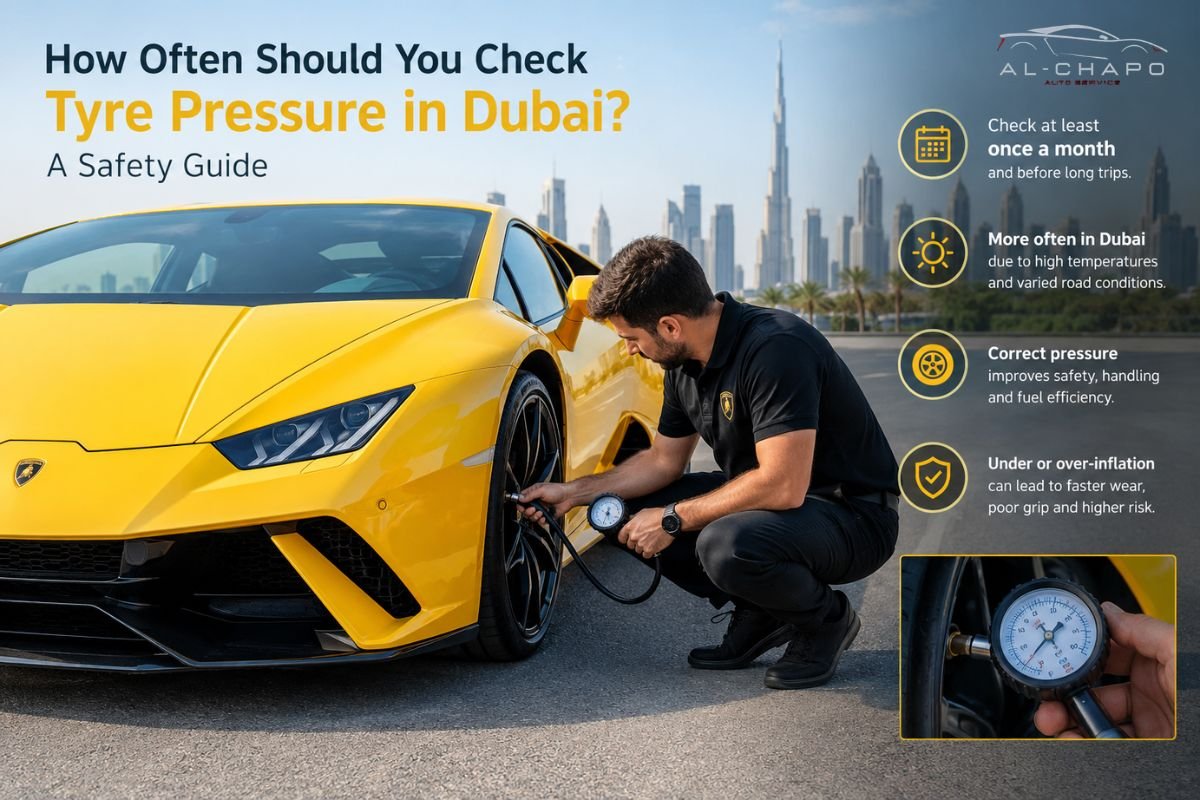
It is recommended that you check your tyre pressure at least once every two weeks when living in Dubai. During the summer months, when the temperature often goes above 40ºC, you should check it more frequently. It is advisable to check your tyre pressure before you embark on a long journey, and do the check when the tyres are cold. Dubai’s weather conditions, high speed limits, and extensive journeys cause more strain on the tyres compared to other cities, meaning that getting the pressure checked can save you from possible problems such as a blowout, loss of control, and increased fuel consumption. The guide will explain how you are supposed to check your tyre pressure.
Unfortunately, many drivers in Dubai apply for car repairs and maintenance only after the problem with their tyres has been revealed. Regular checks of tyre pressure at home can prevent most problems with tyres.
Key takeaways
- Check the tyre pressure every two weeks, and weekly while it’s hot in the summer months in Dubai.
- Make sure that the readings are taken in cold conditions, and use the pressure indicated on the sticker found on your car door.
- Schedule tyre replacement services in Dubai when the tread is worn out or damaged.
- Combine tyre checking with routine maintenance services in Dubai so that you can stay fully safe.
Why does heat change tyre pressure in Dubai?
Tyres are filled with air, and air expands when it is hot. The air inside tyres warms up and expands when it’s hot on the road, which can be 60ºC or higher in the sun. That is the reason why you might be confused about your tyre’s condition after an early morning drive and find it different later in the day.
How extreme heat changes tyre pressure
It is not only the heat that is responsible for an increase in pressure. Over time, air may also seep through the valve and the rubber in dry conditions. Consequently, when hot, a tyre can be overinflated, and when cold, it can be underinflated, and both of these conditions can cause problems.
Why is low pressure dangerous on desert highways?
If the tyres are underinflated, they will bend more than intended, and the additional bending will cause internal heat in the tyre. With the temperatures outside and the high speeds on Sheikh Mohammed bin Zayed Road or Emirates Road, this can cause tread separation or a blowout. Low pressure also adds weightiness when steering and extends stopping distances.
How often should you check tyre pressure?
Regularly check the tyre pressure of most cars in Dubai every fortnight and before long journeys. Many drivers should check weekly during the summer months, since there are more and larger changes in pressure during the heat of the summer.
Check every two weeks, and weekly in summer
Two weeks is a good time period for normal daily driving during cooler months. Then check weekly from June – September as tyres expand and contract more rapidly when the temperatures are high. Always have a small digital tyre gauge to get the reading in less than 2 minutes in your glove box.
Check before long trips and after temperature changes
Always check your tyres before driving to Abu Dhabi, Al Ain, Sharjah or further. Review them in return, and if there has been a significant temperature change (huge temperature drop or rise), for example, the first cold evening of winter. It is at these times that pressure is most apt to fluctuate.
How to check tyre pressure the right way?
It’s as important to check tyres properly as it is to check them frequently. To take a proper reading:
- Stop on flat ground and wait 3 hours or more after driving to ensure tyres are cold.
- Check the driver’s door frame or fuel-cap cover for a pressure recommendation. Never use the maximum pressure on the sidewall of the tyre.
- Take off the valve cap and push the gauge tightly against the valve stem.
- Compare the reading with the recommended value and record it.
- Add or remove air to adjust pressure to match the sticker, then replace the valve cap.
- Inspect all four tyres, including the spare (if applicable).
Find the correct pressure value for your car
The pressure is different for each car and may be different for the front tyres vs. the rear tyres. This can be different for a heavier SUV full of passengers than when it is being driven alone. Always do as the manufacturer says for your particular vehicle.
Why cold tyres give the most accurate reading
After just 20 minutes of rolling, a tyre will measure higher than its original cold pressure. The best time to check is early in the morning or after the car has had a few hours’ rest.
Warning signs your tyres need attention
In some cases, the warning light does not turn on until after some problems have occurred. Be aware of these symptoms:
- When driving straight ahead on a level road, the car pulls to one side.
- Steering wheel shimmy, unusual steering wheel weight at speed.
- Tyre pressure warning light comes on on the dashboard.
- The tread is uneven; one side is worn down more than the other.
- You notice bulges, cracks, or cuts on the sidewall.
- Fuel usage increases without any apparent reason.
If any of these are observed, slow down, check pressure, and make a prompt appointment for inspection. If a sidewall or side wall has been damaged or the tyre has lost air pressure, do not drive on that tyre. Go to a provider of tyre replacement service in Dubai, and they will be able to assess the tyre properly.
Common tyre pressure mistakes and how to avoid them
There are lots of little mistakes that drivers make that, over time, impact tyre safety. The table below outlines the most popular ones.
| Common Mistake | Why It Is a Problem | Simple Fix |
| Checking tyres after a long drive | Warm tyres show higher readings than they really have | Check when the car has cooled for at least three hours |
| Using the sidewall maximum as the target | Maximum pressure is not the ideal setting for your car | Use the pressure on the driver’s door sticker |
| Ignoring the spare tyre | A flat spare can leave you stranded | Check the spare every month or two |
| Letting air out in summer heat | Pressure drops below the safe range when it cools | Recheck pressure when the temperature changes |
| Skipping the valve caps | Dust and moisture can cause slow leaks | Always replace the caps after checking |
When should you book a professional service?
While it may be beneficial to do a quick gauge check at home, there are some types of tyre problems that require a trained technician. If you’re losing air, if a tyre appears to be damaged, or if the tread has worn below the legal depth, book a professional inspection.
Signs it is time for a tyre replacement
The best indicator is the tread depth. If the wear bars stand flush against the tyre when worn to this extent, the tyre must be replaced. A technician can also inspect for damage inside the vehicle that you aren’t able to see from the outside. Many drivers trust the services of a reliable tyre replacement service in Dubai Centre that has quality tyres and balancing equipment for dependable advice and fitting.
What happens during a professional inspection
A workshop typically will inspect tread and sidewall condition, wheel balance, wheel alignment, and valve condition. This takes much less time than most drivers think and can detect issues that won’t be revealed by a gauge check. These checks are part of the routine checks performed on Dubai vehicles by Alchapo Auto Service.
Why does routine maintenance matter for tyre safety?
Tyres are often connected with the suspension, brakes, and steering, so issues in one area typically manifest themselves in the tyres. Getting regular service can help you identify these connections early. Most drivers have a car routine maintenance services in Dubai plan to maintain tyres, brakes and fluid all together.
Routine checks that protect your tyres
Wheel alignment, suspension checks, and brake inspection may be done as part of a scheduled service. The checks help your tyres last longer and wear evenly. They also help to maintain a car’s stability when driving at high speed, which is essential on the long straight roads of the Emirates.
How to choose the best car service center?
If you want to find a suitable service provider, find a center that openly discusses its pricing system and uses original parts. It is important to make sure that readers learn about the experience of technicians. Look through reviews, but do not focus primarily on the rating and the star system.
To find the best car service center Dubai, ask for a quote before any work begins to compare different repair centers and find out which one is better. In a good repair workshop, you will receive clear information about the restoration of your vehicle and see the replaced components when possible.
Questions to ask before booking
It is necessary to find out how long it will take to service and repair the car, what warranty applies, and whether the step of measuring the pressure and the depth of the tyres is included in the list of services provided.
Conclusion
While checking tyre pressure may seem insignificant, it can greatly affect safety, fuel usage, and the life of the tyres in the scorching heat of Dubai. Checking the tyre pressure every two weeks will help people solve the problem earlier before it turns into an emergency at some point in time. When deeper examination is required, car repair and maintenance service in Dubai can take care of your car at any time. Alchapo Auto Service is always available for drivers and provides all necessary care.
Frequently asked questions
Check them every two weeks and weekly during summertime from June to September, and also before any long journey.
Yes. The heat causes the air inside the tyre to expand, therefore increasing the pressure significantly in hot weather and making it decrease when the temperature gets lower.
It is better not to. The temperature causes the tyre pressure to be higher than it should be; you should give them at least three hours to cool down.
Search for a shop that is transparent with pricing, offers real parts, and has authentic reviews from other honest customers. Ask them to write you an estimate in advance.