How often should brakes be checked?
Table of Contents
- Key Takeaways
- Why do regular brake checks matter?
- What affects brake inspection frequency?
- When should brake pads be replaced?
- What are the warning signs of brake issues?
- How is brake inspection done?
- Can you check brakes yourself?
- What happens if you skip brake checks?
- Conclusion
- Frequently asked questions
Key Takeaways
- The brakes are to be inspected after every 10,000-15,000 km.
- City driving needs more frequent inspection.
- Warning signs must never be ignored.
- Complete safety is guaranteed by professional inspection.
Car brakes are to be inspected after every 10,000-15,000 km or at least twice a year. But when you drive every day in the city traffic, such as in Dubai, you might need to be inspected more frequently. Brake inspection must always be part of the car routine maintenance services in Dubai, so that it does not fail suddenly.
Moreover, at Alchapo Auto Service, skilled technicians suggest that you should have your brakes checked regularly since the ability to stop is a matter of life and death. So, it is not a good idea to wait until you hear something or you can feel it vibrating.
Why do regular brake checks matter?
One of the most significant safety components of a car is brakes. Brake problems can escalate into serious ones very fast, unlike engine problems, which might have warning signs that might manifest slowly.
Regular checks help to:
- Detect worn brake pads early
- Avoid destruction of brake discs.
- Improve stopping distance
- Avoid expensive repairs.
- Ensure a smooth driving experience.
Additionally, brake components wear out more quickly in hot climates such as Dubai since heat causes friction. Therefore, periodic examination is not only advisable, but also obligatory.
At Alchapo Auto Service, brake systems are serviced with special attention and appropriate tools and qualified mechanics. This makes your car safe on the road.
What affects brake inspection frequency?
All cars do not require a similar schedule. The frequency of brake checks is determined by a number of factors.
1. Driving Style
Brake pads wear quicker in case you brake suddenly or drive aggressively. Smooth drivers tend to have a longer life for the brakes.
2. City vs. Highway Driving
Driving in the city implies a lot of stopping. Thus, vehicles in traffic require a higher rate of inspection than the highway automobiles.
3. Vehicle Type
Luxury cars, SUVs, and performance cars might require special attention. For example, the audi brake pad replacement in Dubai needs brand-specific tools and proper fitting.
4. Load and Road Conditions
The heavy-load cars or those that travel on uneven roads put more stress on the brake system. Therefore, there is the possibility of dusty roads impacting brake parts.
When should brake pads be replaced?
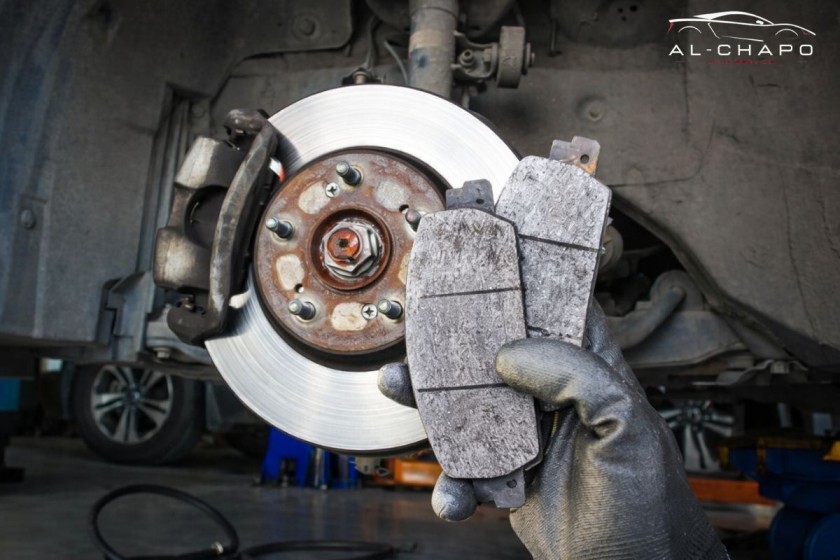
Brake pads are not permanent. The average life of the brake pads is 30,000 to 70,000 km, based on the driving habits.
You might require car brake pad replacement when:
- You hear a squeaking or grinding sound.
- The brake pedal feels soft.
- The car brakes to one side.
- You feel a vibration during braking.
- A warning light appears on the dashboard.
Ignoring these indicators may harm the brake disc that is costlier to fix. However, replacing your car early is more cost-effective and ensures the safety of your car.
At Alchapo Auto Service, brake pad thickness is measured by the technicians during inspection. They recommend brake pad replacement Dubai in case of necessity to avoid additional damage.
What are the warning signs of brake issues?
The question many drivers ask is, Should I wait till I feel it? The simple answer is no. But being aware of warning signs will make you take action.
Look out for:
- Metallic grinding sound
- Burning smell after braking
- The brake pedal is going too low.
- Delayed stopping response
- ABS warning light
Moreover, when you can feel the vibration in the steering wheel during braking, it is not necessarily brakes that are the problem. It might also be associated with alignment or suspension.
Under these circumstances, system inspection and the best car suspension services in Dubai are fully safe.
How is a brake inspection done?
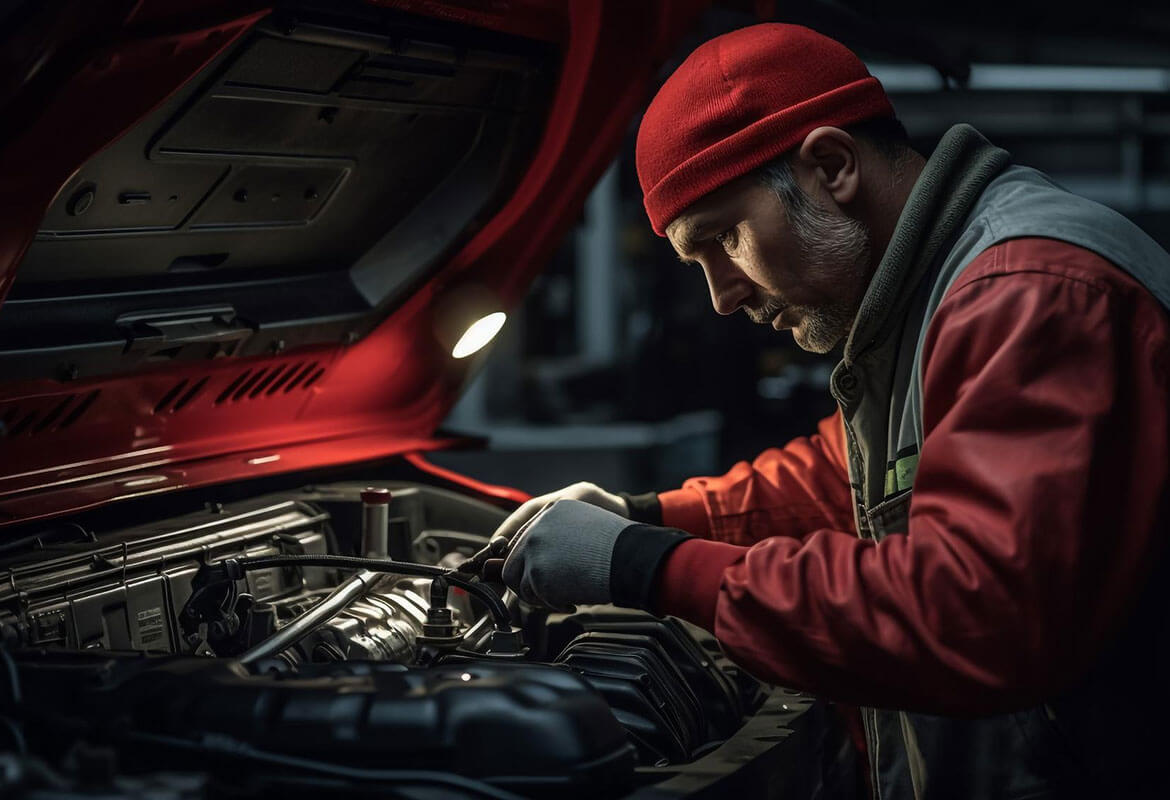
A professional brake check involves doing more than just checking the pads. At Alchapo Auto Service, a full inspection involves the following:
- Measuring the thickness of brake pads.
- Checking the condition of brake discs.
- Examining brake fluid level
- Checking brake lines for leakage.
- Checking calipers and hardware
Furthermore, the condition of the brake fluid is significant. The braking power is decreased by old brake fluid. However, the fluid replacement is occasionally prescribed after every 2 years.Good inspection will make sure that there are no undercover issues.
Can you check brakes yourself?
Simple visual examinations can be conducted, but full diagnosis requires special equipment. For example:
- You can listen for noise.
- Check the level of brake fluid.
- You can notice the vibration.
Nevertheless, pad thickness and disc condition should be measured by a professional.Consequently, frequent attendance of a reputable workshop can guarantee proper assessment.
What happens if you skip brake checks?
Failure to check the brakes can result in:
- Brake failure
- Increased repair cost
- Disc damage
- Unsafe driving
- Reduced vehicle value
Moreover, the fuel efficiency is influenced by the worn brakes since the car labors to stop.Routine maintenance is always less expensive than emergency maintenance.
Conclusion
Brakes should not be neglected. Ideally, they should be serviced after every 10,000-15,000 km, particularly during heavy city traffic. A periodic check-up helps to avoid unexpected failures and to drive safely. In case of any red flags, do not postpone checking. Early replacement of brake pads in Dubai and servicing of your car at Alchapoautoservice will ensure that your car is reliable, safe, and smooth on the road.
Preventive measures are the little things you can do today to save you a lot of money tomorrow.
Frequently asked questions
Every 10,000 km or twice yearly is recommended.
Brake pads last between 30,000 and 70,000 km.
No, squeaking can be a sign of worn brake pads.